

Reasons Your Food Label Gets Flagged by FDA (and How to Fix Them Before Shipping)
Every shipment stopped at the border costs you time and money. FDA label violations are one of the most common reasons imported food gets detained or refused entry. The good news: most label problems are fixable before your product ever leaves the origin country.
Here are the three issues we see most often — and what you can do about them.
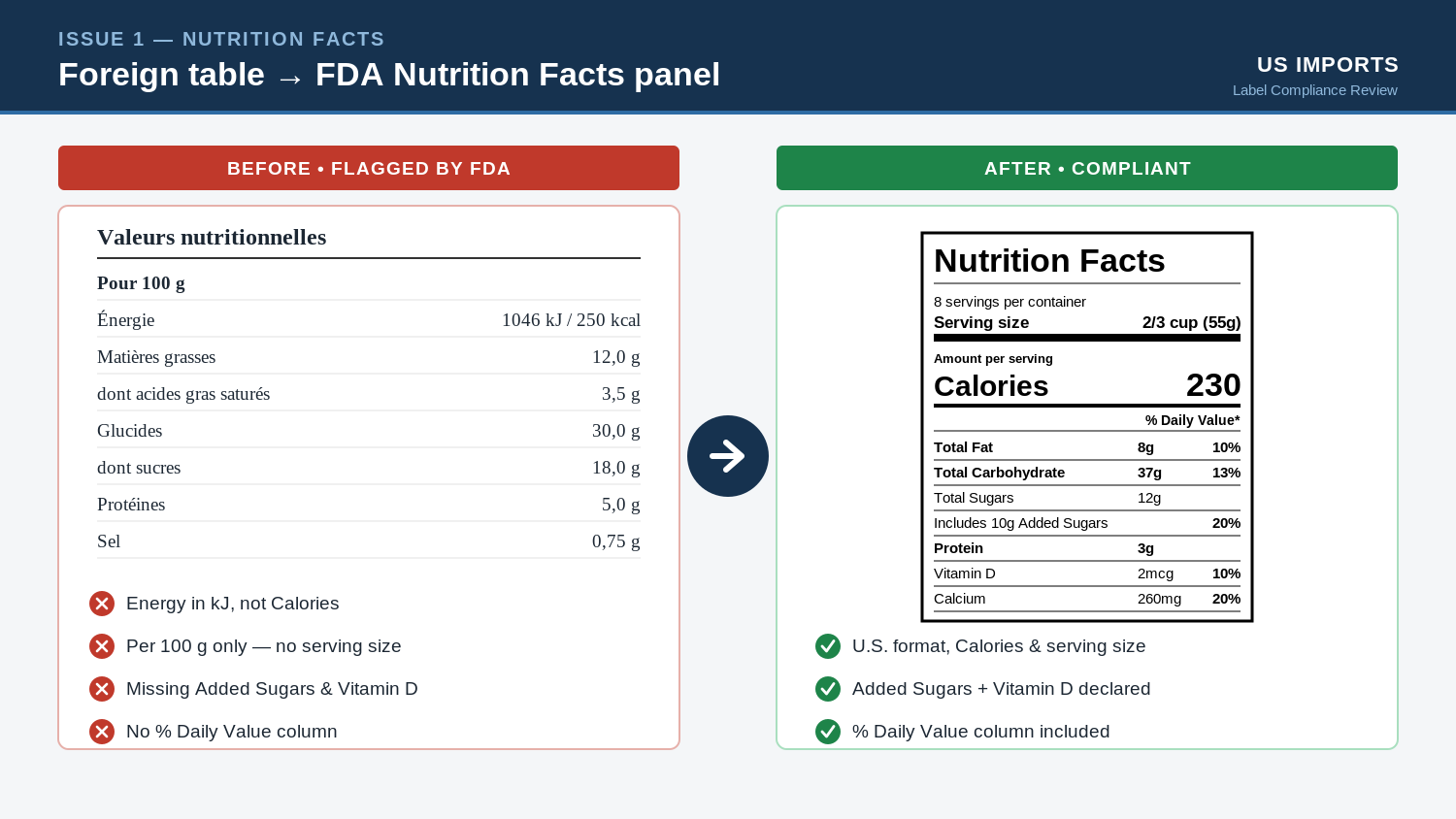
1. Missing or Incorrect Nutrition Facts Panel
FDA requires a Nutrition Facts panel on nearly all packaged food sold in the United States. The format, font size, and nutrient order are strictly regulated under 21 CFR Part 101.
Common mistakes include:
Using a foreign-format nutrition table without converting to the U.S. standard
Listing nutrients in the wrong order
Using incorrect daily value percentages
Skipping required nutrients like added sugars or Vitamin D
The fix: Redesign your Nutrition Facts panel to match the current FDA format. If your product was last updated before 2020, it almost certainly needs a refresh. A label review catches these gaps before customs does.
2. Unauthorized or Misleading Claims
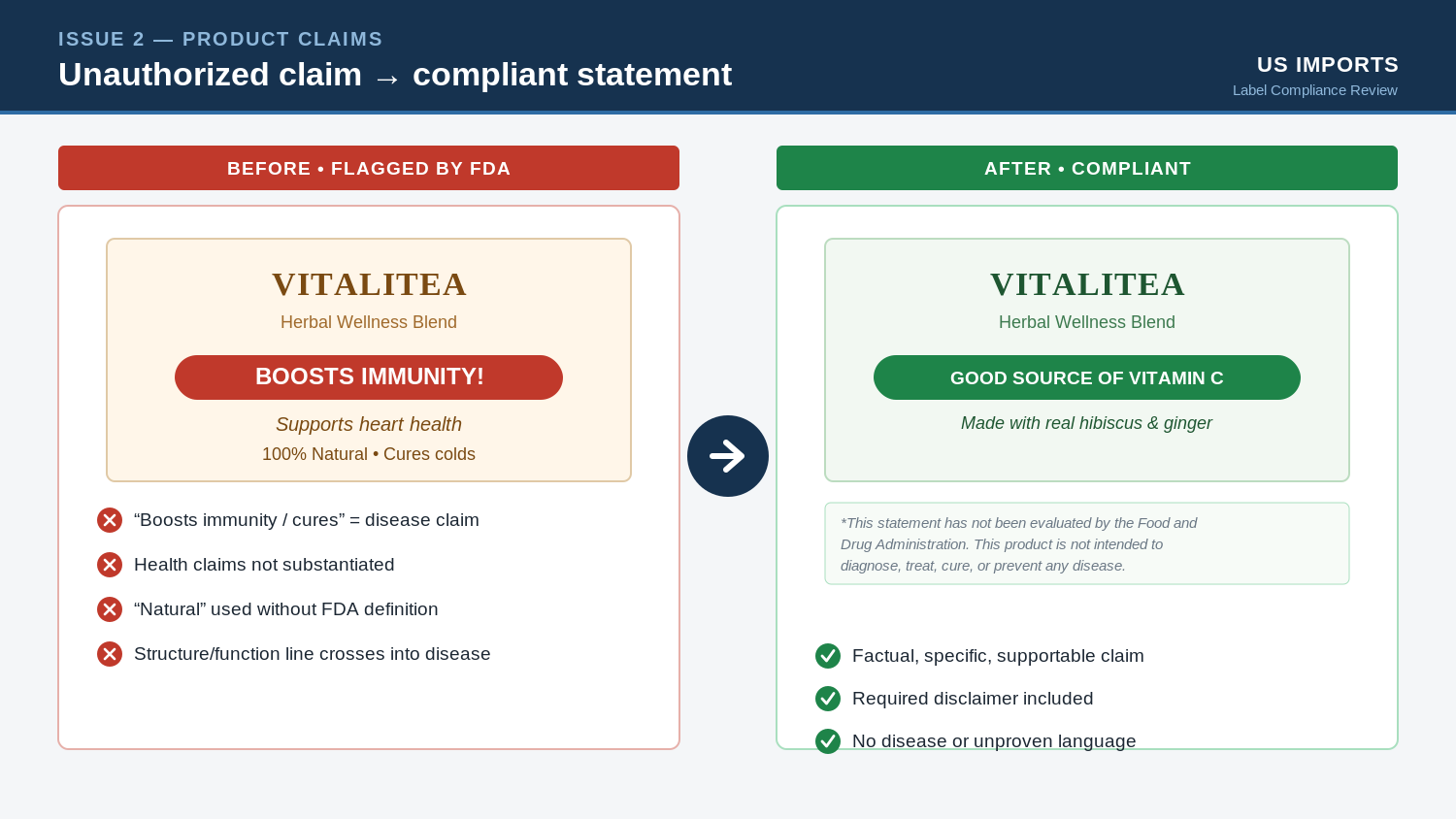
This is where importers get into serious trouble. A claim on your label that sounds harmless in your home market can trigger an FDA warning — or an FTC inquiry — in the U.S.
Examples of problematic claims:
"Boosts immunity" or "supports heart health" without proper substantiation
Structure/function claims that cross into disease territory
"Natural" or "organic" used loosely without meeting U.S. definitions
Health claims not authorized
The FTC monitors advertising claims, including those that appear on packaging. FDA handles the label itself. Both agencies can act on misleading statements.
The fix: Audit every claim on your label against FDA's approved claim list. Remove or reword anything that implies the product can diagnose, treat, cure, or prevent a disease. Keep claims factual, specific, and supportable.
3. Incomplete or Absent Required Label Elements
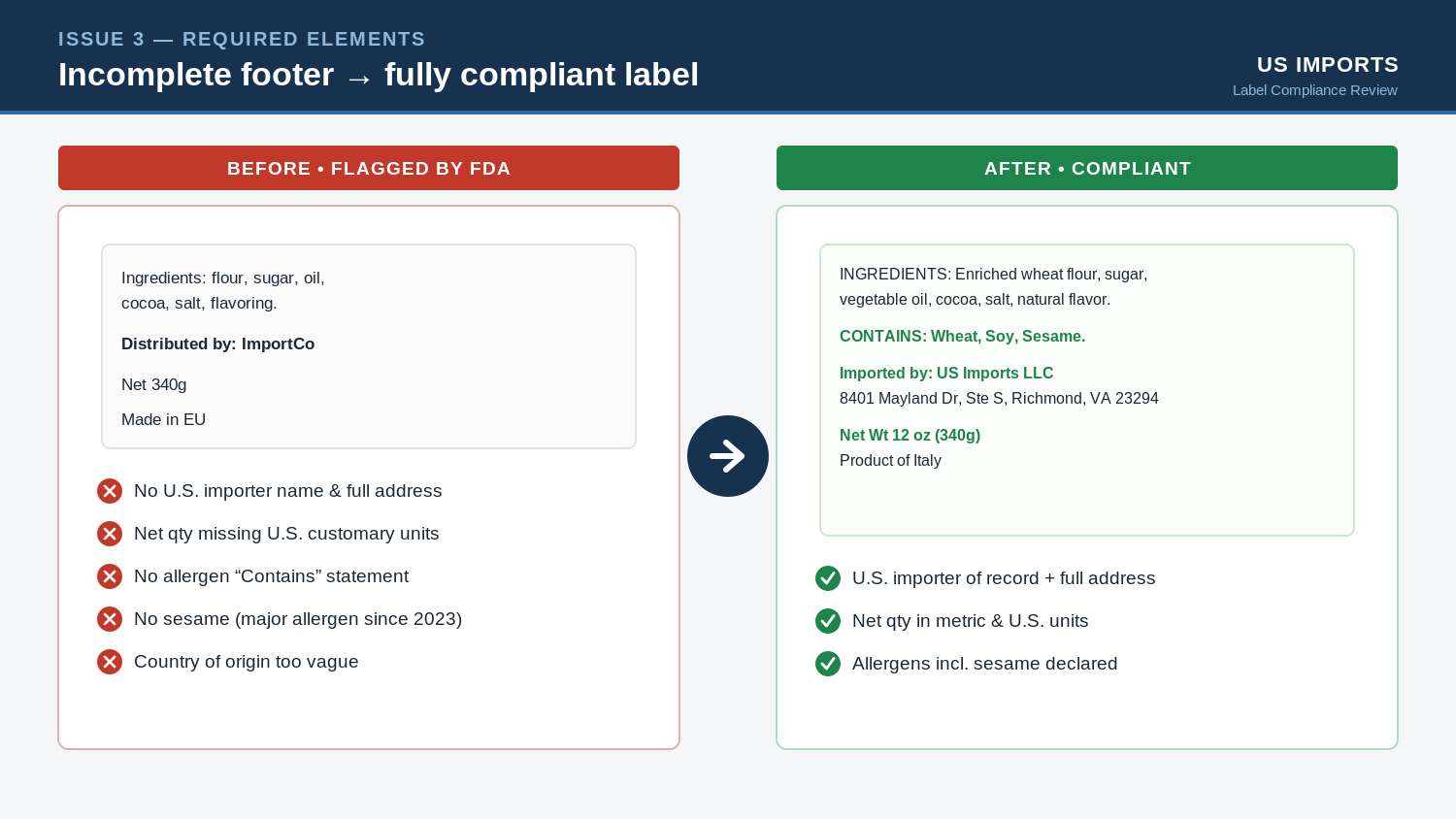
FDA has a mandatory checklist for food labels. Miss one item, and your shipment is at risk.
Frequently missing elements:
U.S. importer of record name and address
Net quantity of contents in both metric and U.S. customary units
Ingredient list in descending order of predominance
Major food allergen declarations (per FALCPA requirements)
Country of origin statement
Allergen labeling is especially high-stakes. Sesame was added as a major allergen in 2023. Many imported labels still do not reflect this change.
The fix: Run your label against the full FDA required elements checklist before production. Once labels are printed and applied at scale, corrections become expensive. Catching issues in the artwork stage saves you from reprinting thousands of units.
Fix Your Labels Before They Cost You a Shipment
Label problems do not fix themselves at the port. They result in holds, refused entry, and destroyed product. The earlier you review your labels in the import process, the lower your risk.
US Imports offers label compliance review services for food importers bringing products into the U.S. market. Our team checks your labels against current FDA requirements so you can ship with confidence.
Get started today: https://www.usimports.us/services
